

Key points:
- Play-based ABA therapy for autism makes learning feel natural by turning games into chances to build communication and social skills.
- Children learn faster when motivation is high, and play creates the kind of motivation worksheets and drills never can.
- Simple at-home play activities reinforce skills your therapist is working on without adding screen time or family stress.
Play is your child’s first language. Long before words, kids learn through movement, faces, and shared moments. When therapy taps into that language, real growth starts. Play-based ABA therapy for autism uses games, songs, toys, and silly moments to teach the skills that matter most. Asking for things. Taking turns. Joining in.
You don’t need a therapy degree to bring play into your home. You don’t even need new toys. A blanket fort, a ball, a stack of cards, or just your hands clapping a rhythm can become a learning moment. Connection comes first. Skills follow. That’s the magic of play-based ABA therapy for autism at its core.
This article shares simple, parent-friendly ways to use play to build child communication skills. We’ll look at what makes this approach so powerful, easy games you can try, and how to know when to step back and let your child lead. Solid early intervention for autism leans heavily on play because young kids learn best when they’re having fun.
Why Play Works So Well for Learning
When kids play, their brains light up in ways no drill or worksheet can match. They want to be there. That motivation is the engine behind learning. Social skill development through ABA rides on motivation, and play creates it without you having to push.
Play also lowers the pressure that comes with formal teaching. There’s no right or wrong. No failure. Just exploration. That safe feeling lets your child try new things, including new words and new ways to relate. You can see this in any session of ABA therapy where laughter and learning happen at the same time. The heart of play-based ABA therapy for autism sits right there, in those easy moments.
Research from developmental science backs this up. Kids who learn through play retain skills longer and apply them in more places. That’s why interactive ABA therapy strategies matter so much during the early years. Steady interactive ABA therapy strategies mix structure with fun, which is exactly what younger kids need.
What makes play such a strong teacher:
- It builds attention without demanding it
- It rewards effort with fun, not pressure
- It opens space for natural language exchange
- It teaches turn-taking through real practice
Simple Play Activities to Try at Home
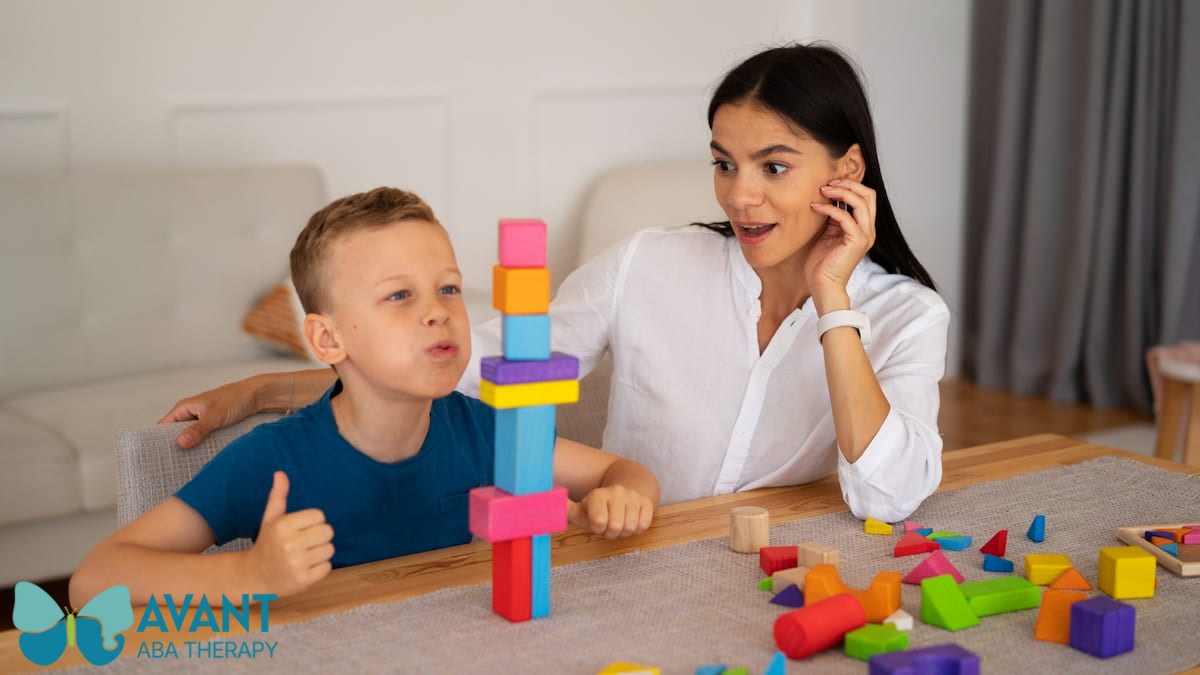
You probably already do half of these. The key is to do them with intention. Pick one or two skills your therapist is working on and weave them into the play. Don’t try to teach everything at once. Many in-home therapy activities for children start exactly this way. You can find more on our parent resources page.
Pretend Play
Pretend is powerful. Set up a tea party with stuffed animals. Run a pretend shop with empty boxes. Build a doctor’s office with band-aids and a pretend stethoscope. Each game opens chances for language, role-taking, and turn-taking.
Use the same phrases your therapist uses. If they say “I want,” echo that. If they prompt “your turn,” echo that too. The familiar phrases bridge the gap between sessions and play. Many in-home therapy activities for children start with this kind of pretend setup.
Songs and Movement
Songs are stealth teaching. They build language patterns, rhythm, and shared attention all at once. Try songs with pauses where your child can fill in a word. Sing Wheels on the Bus and pause before “round and round.” That pause is an invitation to respond.
Movement songs also help kids who learn through their bodies. Add hand gestures or simple dance moves. This is one of the most effective interactive ABA therapy strategies for younger children, and it builds child communication skills in ABA therapy at the same time.
Following Your Child’s Lead
Here’s a hard truth for many parents. The best play sessions aren’t the ones you plan. They’re the ones where you follow your child’s interest, even if that interest is just lining up cars or flipping a light switch.
When you join your child’s world, you become a partner instead of a teacher. That shift changes everything. Your child starts to see you as someone fun, not someone running drills.
Try this. Sit beside your child during play. Watch what they do. Mirror it for a few minutes without talking. Then add one small comment or sound. See how they respond. This kind of attuned play is a key part of early intervention for autism. Programmes that use it tend to see stronger gains in joint attention and child communication skills in ABA therapy routines.
A few ways to follow your child’s lead:
- Copy their actions before adding your own
- Use single words to label what they’re doing
- Pause and wait for them to respond before adding more
- Celebrate any attempt at communication, even small sounds
If you’d like to explore how home sessions look in practice, our blog on the first in-home ABA therapy session walks through what to expect from week one.
When to Step In and When to Step Back
Knowing when to push and when to wait is an art. Sometimes a small prompt unlocks a new skill. Other times, stepping back invites your child to try on their own. The difference matters.
Step in when your child seems stuck or frustrated. Step back when they’re exploring something new. If they’re trying hard, give them room. If they’ve given up, offer a hint and wait.
Look for signs your child needs a break. Eye contact slipping. Energy dropping. Repetitive movements ramping up. These are signals to pause and reset. Talking with your therapist about prompting can be helpful. Each family’s parent guidance plan is shaped around your child’s specific needs and pace. Solid social skill development through ABA gives kids space to try, fail, and try again without pressure.
Building Social Skills Through Group Play
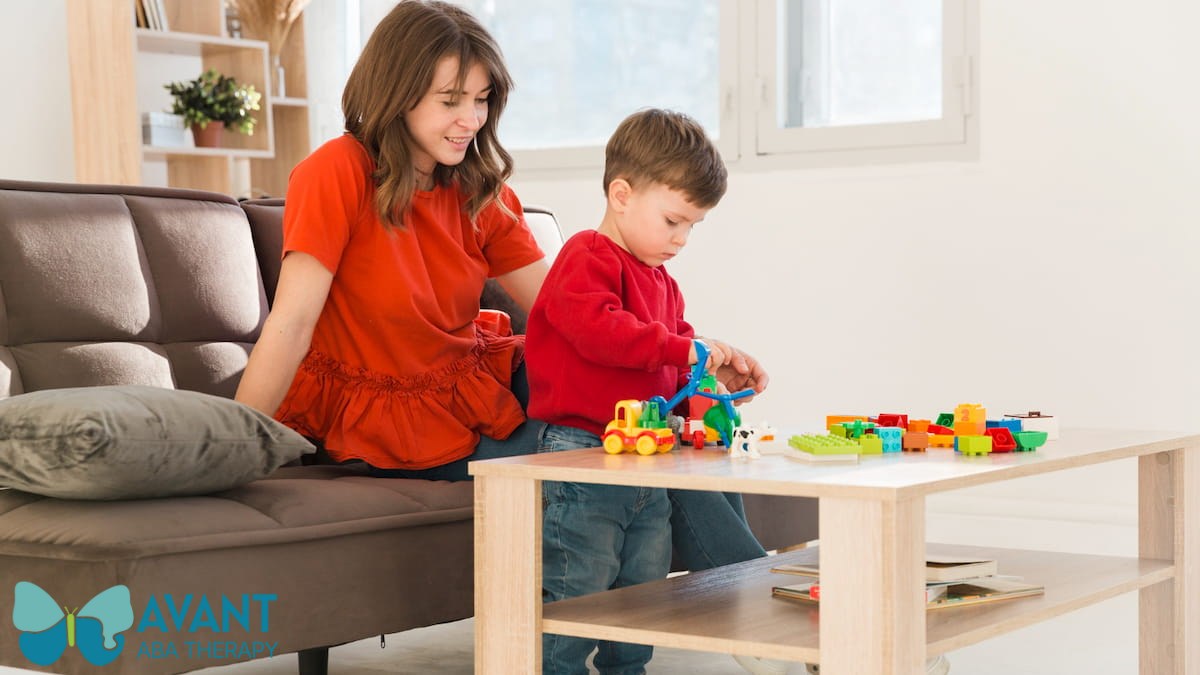
Social skills don’t grow in isolation. They need other people. Brothers and sisters, cousins, neighbour kids, playgroups. Each one offers a chance for your child to practise the moves that matter in the bigger world. This is where social skill development through ABA really starts to shine.
Start small. One peer for short stretches. Choose activities your child enjoys. Set up wins, not pressure. If your child loves trains, plan a train-themed playdate. Motivation lowers the social hurdle. Strong programmes in ABA therapy in North Carolina often coach parents on these kinds of setups.
Coach gently from the sidelines. If your child tries to grab a toy, model asking. If they ignore a peer’s hello, prompt a wave. Praise every small connection. The same warmth helps your child connect at home too, with steady support from child communication skills in ABA therapy carrying over into peer time. Many families in ABA therapy in North Carolina find that group play is where the real social practice happens.
Smart steps for early peer play:
- Start with one peer at a time
- Keep playdates short, around 30 to 45 minutes
- Pick activities both kids find fun
- Plan a clear start and end to reduce overwhelm
You can read more about how home-based sessions support these goals on our blog about how in-home ABA therapy supports your child. Many families also browse more reading on our resources page. The right early intervention for autism plan often blends these home and peer practice runs together.
Frequently Asked Questions
How is play-based ABA different from regular play?
Play-based ABA therapy for autism still feels like play to your child, but the therapist or parent has goals in mind. They use the fun moments to teach specific skills like requesting and turn-taking without making it feel like work.
At what age can my child start play-based ABA?
Children can begin as young as 18 months. Early intervention for autism is most effective during these years. Play is the natural way young kids learn, so play-based methods fit well with toddlers and preschoolers alike.
Do I need special toys to do this at home?
No. Your child’s favourite toys work fine. What matters more is how you engage during play, not what you play with. Even cardboard boxes and household items become great in-home therapy activities for children.
Can play-based ABA help with verbal communication?
Yes. Play creates natural reasons to ask, share, and respond. Many children show meaningful gains in child communication skills in ABA therapy when therapy is built around the kinds of play they genuinely enjoy.
What if my child plays alone and doesn’t want to join in?
That’s common at first. Start by playing near them, not with them. Mirror what they do. Slowly join in with one small action. Over time, parallel play becomes shared play and grows from there.
Where Play Meets Real Progress
Children learn best when they’re having fun. Play-based ABA therapy for autism turns games, songs, and silly moments into chances for your child to grow socially and communicate with confidence. The best part is, no fancy materials are needed. Just connection, patience, and the right plan.
Avant ABA works with families across ABA therapy in North Carolina to make therapy feel like the most welcome part of the day. Our team blends warmth with proven strategies, building skills through the kind of play your child already loves.
Contact our team to learn how play-powered therapy can help your child connect, communicate, and thrive both at home and out in the world.